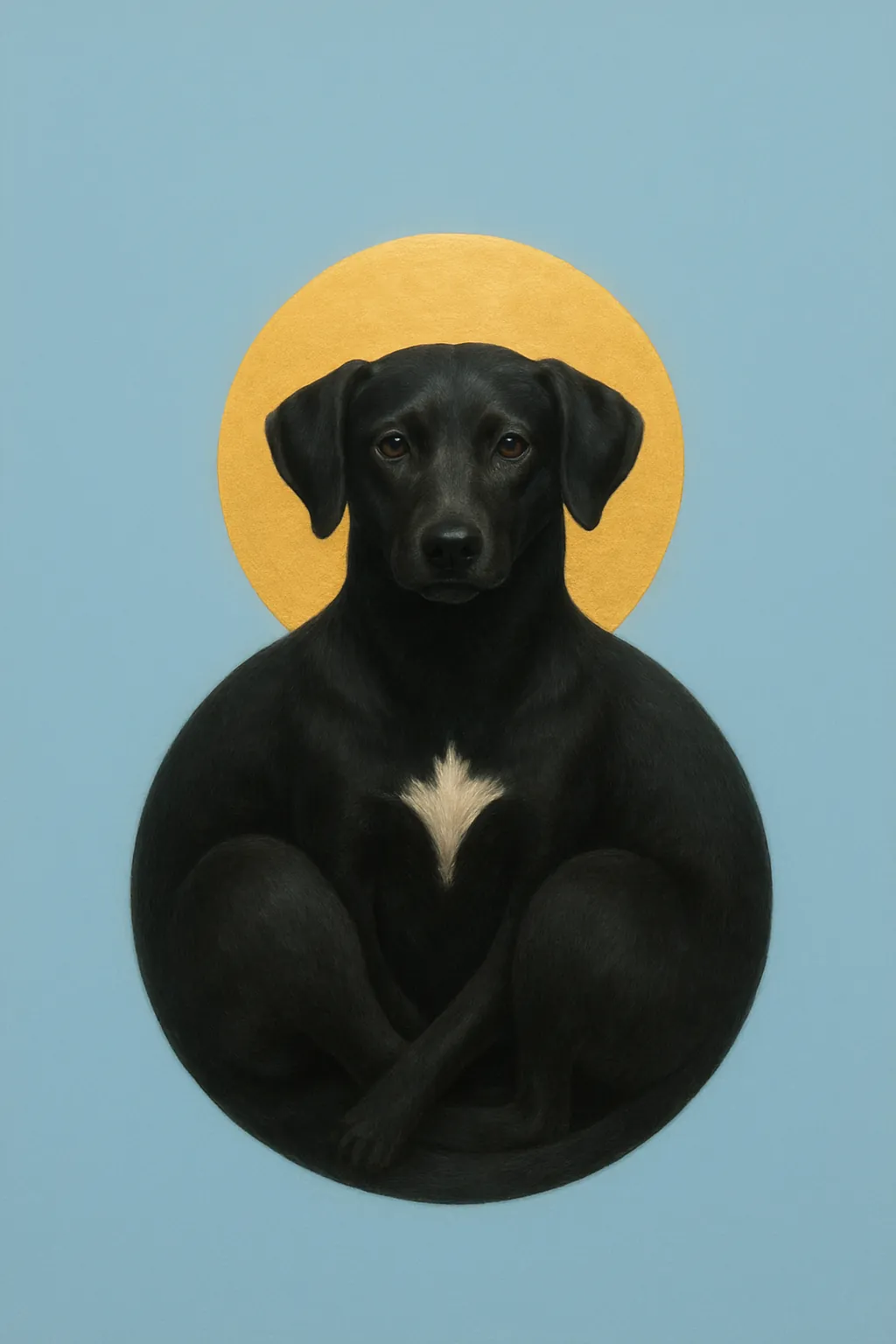
“Fine art print” can sound like a tidy category, but it is really a useful question. It asks you to look past the image itself and consider the choices that made the object: who made the work, how it was produced, what it is printed on, whether the run is limited, and how clearly those facts are being shared. A good answer is not a secret handshake for collectors. It is a way to buy with open eyes.
That matters whether you are choosing your first print or adding to a wall that has been evolving for years. An artwork does not need to be expensive to deserve attention. It does need to be honestly described. Once you know what to look for, you can spend less time decoding jargon and more time deciding whether a piece belongs in your life.
There is no single fine art print process
A fine art print may be an original print created through a process such as etching, lithography, screenprinting, or woodcut. In those cases, the artist makes the image specifically for printing. The Metropolitan Museum of Art’s introduction to printmaking describes this family of processes as transferring an image from a prepared matrix to another surface, most often paper or fabric.
It can also be a carefully made reproduction of an artwork that began as a painting, photograph, drawing, or digital composition. That does not make it lesser by default. The important distinction is honesty: is the work being offered as an original print made through a printmaking process, or as a reproduction of an original image? Both can be meaningful art objects. They simply carry different stories.
Traditional print studios make this distinction clearly. Highpoint Center for Printmaking, for example, explains original printmaking as a process in which an artist works from a matrix to create multiple original works. If a listing does not say what kind of print it is, asking is not fussy. It is sensible.
What makes a print feel like an artwork, not a decoration?
Start with authorship. A strong listing names the artist and gives you a clear sense of the work’s origin. You should be able to tell whether the artist made the image, authorised the edition, and stands behind the finished object. That connection is often what turns a picture you like into something you want to keep looking at.
Next, look for care in the physical choices. Paper, canvas, ink, pigment, finish, and mounting all affect how a work reads in a room and how it will age. A textured surface may deepen a quiet image; a smooth, bright surface can sharpen line and colour. There is no universally best material. The point is that the material should suit the work, and the seller should be able to describe it plainly.
Finally, look for intention. A print can be open edition or limited edition, signed or unsigned, small or large. None of these labels is a magic stamp of quality. What they can show is that the artist or publisher has made a deliberate decision about how the work enters the world. You are not buying a percentage of the artist’s future. You are choosing an object with a particular history, scale, and presence.
Original print, reproduction, poster: the useful differences
These labels are often treated as a hierarchy, but they are better understood as descriptions. An original print is designed to exist as a print, often through a process such as screenprinting or etching. A reproduction starts with a work made in another medium and translates it into print. A poster is commonly produced for broad distribution, usually with affordability and scale as the priority.
That leaves room for overlap. A reproduction can be exceptionally made and deeply satisfying. An original print can have a large edition. A poster can be beautiful. The question is not which word sounds most impressive. The question is whether the object in front of you is being described accurately, and whether it offers the experience you want from it.
Pace Prints’ overview of printmaking techniques is a useful reminder that the word “print” covers materially different practices. Seeing those differences helps you compare like with like instead of assuming that every edition is made the same way.
Can a digital artwork become a fine art print?
Yes. A digital file can be the original artwork, just as a drawing, photograph, or painting can be. What matters is that the artist has made a considered work and that the finished edition is produced with care. The file is not a shortcut around authorship; it is the medium in which the work began.
For a digital original, the useful questions are the same ones you would ask of any edition: who created it, what surface carries it, how is colour handled, how many copies will exist, and what does the artist intend the finished object to be? A print should be judged by the work, the craft, and the clarity of the edition, not by nostalgia for one kind of studio.
This is especially useful when a work moves between photographic, painted, and digital gestures. The process can be part of the meaning. Knowing it lets you understand what you are looking at without reducing the work to the machinery behind it.
How to read a limited edition
A limited edition has a stated cap: once the planned number is reached, no more prints in that edition are made. When a print is marked 12/50, the first number identifies that individual copy and the second names the edition size. The marking is useful because it makes the run legible. It is not a guarantee that number 12 is better than number 32, and it is not a promise that the work will rise in value.
A signature is separate. It may be hand-signed, printed as part of the image, or accompanied by a certificate. If the artist’s direct signature matters to you, ask how and where it appears. If the edition is important, ask what the stated limit includes: are artist’s proofs, different sizes, or alternative surfaces counted separately? Clear answers are a good sign. Evasive ones are a reason to pause.
Edition size also changes the feeling of ownership. A small run can feel intimate; a larger run can make a work more accessible. Neither is automatically more worthy. The better choice is the one whose scale, price, and story make sense to you.
Five questions worth asking before you buy
- Who made the image, and how was this edition authorised? You want a direct answer about the artist’s role.
- What is the print process and surface? Canvas, cotton paper, photographic paper, and other materials behave differently in a room.
- Is it open edition or limited edition? If it is limited, ask for the stated edition size and whether the copy is numbered.
- Is it signed, and what comes with it? A signature, certificate, or edition information can be meaningful when clearly described.
- What will it look like where I live? Check dimensions, orientation, framing or hanging requirements, and how the colour is shown online.
These questions are not a test you have to pass before buying art. They are a way to slow down long enough to notice the details that will matter after the package arrives. When a seller answers them well, you can make a warmer, more confident decision.
Condition, care, and the room around the work
A print is not only an image. It is a physical object that will face daylight, humidity, dust, moving day, and the occasional badly placed coffee. Ask how it should be displayed and cleaned. A paper print may need framing behind appropriate glazing. A canvas print may be designed to hang without a frame. The answer should fit the material, not a generic instruction copied onto every product page.
Look at the room, too. A small work can be quietly powerful near a desk or doorway; a large work needs enough surrounding space to read from a distance. Consider the wall colour, the direction of daylight, and where you will see the piece most often. If the work feels strong only in a tiny product thumbnail, it may not have the presence you expect at home.
Condition also matters when buying from the secondary market. Request clear images of corners, surfaces, signatures, and any edition marks. For a new print, keep the listing, receipt, and any accompanying edition information together. That record is not a promise of future value. It is simply part of the object’s story.
Choose the work before you choose the label
It is easy to turn collecting into a checklist of technical facts. The facts matter, but they are not the whole experience. A print should still have a charge. It should change the wall around it, hold your attention from across the room, or make you notice something new after the hundredth glance.
Start with the image. Notice the emotional temperature, the use of colour, the pace of the composition, and the size you would need for it to breathe. Then use the practical details to decide whether that feeling has been carried into an object you want to live with. Art does not need to justify itself by behaving like an investment spreadsheet.
How The Art Circle Project approaches editions
The Art Circle Project begins with Jameson McShane’s image-making practice: halos, broken circles, quiet fields, ordinary things made strange enough to look at again. The available works are offered as hand-signed canvas editions, each capped at 50. That gives each image a defined run while keeping the work made to be lived with rather than hidden away.
If you are drawn to an image, the available editions show the sizes and purchase details for each work. You can also spend time in the gallery before deciding what belongs on your wall. The right first print is rarely the one you rush toward; it is the one that keeps returning to your mind.

Frequently asked questions
Is a fine art print the same as a poster?
Not necessarily. A poster is commonly made for broad, inexpensive reproduction, while a fine art print is presented as an artwork and should be accompanied by clear information about the artist, process, materials, and edition when applicable.
Does a signed print mean it is limited edition?
No. A signature and a limited edition are separate details. A limited edition should state the total number of prints offered, while a signature identifies the artist’s direct mark on that copy.
What does 12/50 mean on a print?
It usually means this copy is number 12 in an edition capped at 50. The first number identifies the individual print; the second states the planned edition size.
Should I buy a print because it might increase in value?
Buy the work because you want to live with it. Scarcity, condition, artist history, and provenance can matter to future value, but none guarantees appreciation.